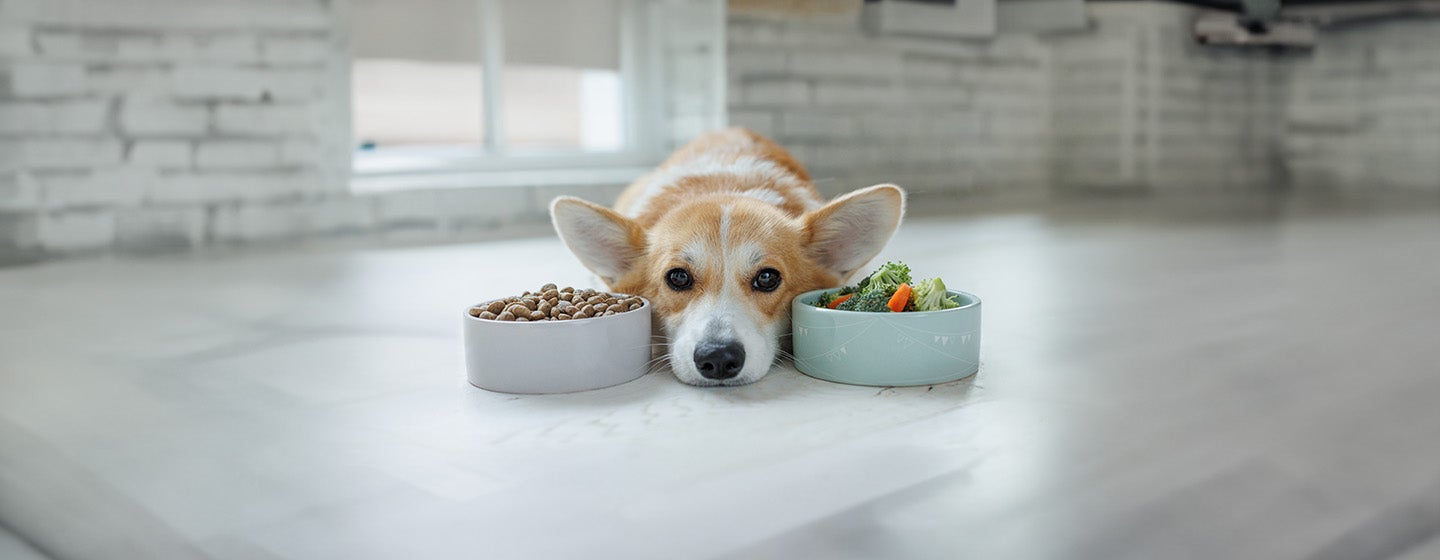
As humans, we eat a lot of bread on a daily basis, but can dogs eat bread too? Find out all you need to know on whether bread is good for dogs and the types to avoid with our guide.
Feeding & Nutrition
Dog Nutrition for a Balanced Diet
To keep them healthy, happy and active for as long as possible, your dog's diet needs the right balance of six major nutrient groups: protein, fats/oils, vitamins, minerals, carbohydrates and water.
Did you know that the nutritional requirements for dogs include 37 different essential nutrients through food alone?
Behaviour & Training
Outdoor Dog Games
Thinking of new and exciting games to play with your pooch can be difficult, especially if you’ve exhausted the thrills of ‘hide and seek,’ and want to play a more exciting game than ‘fetch.’With our list of outdoor dog games, you can be more adventurous at playtime and enjoy the great outdoors come rain or shine!
Puppy diarrhoea can be unpleasant to deal with, especially when you’re already working on house-training your puppy. Aside from the difficulty for you, no owner wants to see their puppy suffer. It can also be tricky to recognise when puppy diarrhoea is a sign of something serious, and when it can be easily dealt with.
This article gives you some information about puppy diarrhoea, plus practical advice on treating it.
What gives a puppy diarrhoea?
There are a number of different triggers for diarrhoea in puppies. The majority of these triggers are not serious and can be easily addressed in order to stop your puppy suffering.
Playing with your puppy is a huge part of your relationship, and it has loads of benefits too! Games help keep your playful puppy active and healthy, and it gives you the chance to get to know one another better.
In all the excitement of bringing your new puppy home, it’s important to remember to start their training right away. The sooner you introduce good habits, the better it will be for both of you as your puppy beings to understand basic commands and gets to grips with your house rules.
Puppy training doesn’t just improve their manners; it’s a fun and rewarding way for you to spend quality time together and really helps you strengthen your bond. Most dogs love training – it’s a chance for them to challenge their brains, earn rewards and get lots of praise and attention!
Car Travelling Tips: Keeping Your Puppy Safe And Happy
8 mins read
Turn your new puppy into an excellent travel companion.
You’ve got a new pup and you can’t wait to show them the world. We know the feeling! But before you start planning that amazing road trip together (or even getting ready to drive to the vet’s), you have to remember that a car can be a very strange thing to a puppy. The closed space, the car movement and even the engine sound can trigger alarm bells for a puppy not used to travelling. But there are a few things you can do to make car trips easier to bear for your pup. Who knows, maybe they will even start looking forward to them! Here are the basics of car travelling for puppies.
Bringing home a new puppy is such an exciting moment and one you’ll never forget! Although there’s a lot to learn, one thing you’ll want to teach them as soon as they step paws into your home is house training.
You won’t have to wait long to discover that puppies pee a lot – sometimes up to 12 times a day! It’s your job to work out when they need to go outside, and teach them what to do once they get there. Keep reading to discover how to house train a puppy and learn how to notice the warning signs of when nature calls.
How long does it take to toilet train a puppy?
It will take between four to six months for your puppy to be fully house trained, but it will depend on their size, age and ability to learn. Some puppies can be toilet trained really quickly in a few weeks, whereas for some dogs it may take longer and could be up to a year.
How to tell when your puppy needs to go to the toilet
There are only certain times during the development of your puppy’s brain when you can help them become a friendly and outgoing companion. This is how to manage their first encounters with adults, kids, dogs and anything else life throws at them.
Puppy socialisation is just one of the many things to think about when you get your puppy. You suddenly find you have a huge shopping list, you have to ensure your house and garden are ‘puppy safe’, and of course you will be thinking about how to ensure your new arrival grows up to be a happy, healthy, well-behaved dog. Too often however people forget about helping their puppy learn the most important thing – how to fit into our crazy lives.
This is where puppy socialisation comes in – and while most people know that puppies need to be socialised, few understand what that really means, when to do it and how to do it properly.
However, with the state of the world at the moment, puppy owners are facing a new challenge when it comes to socialising their puppy – lockdown. Of course, despite the social distancing rules and limited exercise restrictions, we still want to ensure that our puppies emerge from the other side of this happy and ready for the world. That’s why at Purina, we’ve enlisted our in-house behaviourist to give us some essential tips on socialising your puppy during lockdown too.
What is puppy socialisation?
Puppy socialisation is a training process that helps puppies learn how to behave properly when they interact with humans, other dogs and other animals. Puppy socialisation can also help puppies have a better relationship with their owners and become used to being in a range of environments and scenarios. Puppy socialisation is one of the best tools we have to prevent future behaviour problems in dogs, and it’s also how we can ensure we have a dog who we can take everywhere with us and share the bond that we dream of having when we bring our puppy home.
Puppy socialisation in lockdown
Between the ages of 3 – 14 weeks puppies are at a critical stage in their development when they learn to get used to people, other animals and objects (socialisation and habituation). This is so they can be more at ease with the world around them. It means that we have be to creative for puppies under lockdown to ensure they are having as many opportunities as possible to experience new things.
Classic games like ‘fetch’ are lots of fun for you and your dog, but exercise isn’t just about running around. Mental exercise is important too, as it can help fight boredom and teach your dog great new skills.
Dog brain games can help keep your pet on their toes when it’s too rainy to play outside. They’re also great for dogs of any age – brain games for puppies challenge their developing brains and keep them learning new skills. They can also help keep adult dogs stimulated and may even help senior dogs stay alert and active.
We’ve put together five of our favourite brain games for dogs.
1. Treasure hunt
This is a great brain game to test your dog’s thinking skills! Hide pieces of your dog’s favourite treat around the house (or if it’s nice outside, the garden) and let them hunt for a tasty reward. Your dog will have to use their nose to scent out the prize.
Every time you play this dog brain game, hide the treats in increasingly difficult places to keep things interesting. If your dog loves to follow scents (for example, if you have a scent hound) try leaving a ‘trail’ around the house or garden for them to follow. Just take a delicious-smelling treat, touch it on surfaces around the house in a continuous trail, and hide it at the end.
2. Brain training toys
A really simple brain game for dogs involves hiding treats inside a special toy. There are many toys you can buy for this purpose – just put some of your dog’s favourite treat inside, and watch them try to release it.
This may involve rolling their toy a certain way, squeezing it, or using sheer determination. Whichever toy you choose, it will help spread their treats or food out over a longer period of time, as well as keeping them occupied.
Whenever the weather is nice and the sun peeks through, it’s time for those of us lucky enough to have a garden to get out there with our dogs and make the most of our own bit of the great outdoors.
Finding the best toys to play with your dog in the garden will be the ideal way to enhance your relationship and provide vital physical and mental stimulation, and that isn’t just good for your pet! Research has shown that dog owners are fitter than the average person thanks to the increased daily exercise and the chance to play games. Find extra motivation to get active and outside with your dog this summer, with this list of our all-time favourite garden dog toys.
Thinking of new and exciting games to play with your pooch can be difficult, especially if you’ve exhausted the thrills of ‘hide and seek,’ and want to play a more exciting game than ‘fetch.’With our list of outdoor dog games, you can be more adventurous at playtime and enjoy the great outdoors come rain or shine!
Today, there are so many types of dog toys available that it can be difficult to choose which ones to get. Where do you begin? What will be both fun and educational for your dog? All pet owners face these questions when they first consider buying a dog toy, and it can be hard to find answers.
In this article, we’ve put together a simple guide to help you get started when it comes to choosing the best dog toys.
Best dog toys
Many pet owners wonder if there is a ‘best’ dog toy: a single, universal toy that will make their dog happy, as well as challenge them and help develop their skills. While there are a range of toys available now, there is no best dog toy. Each dog prefers different toys.
Moreover, different dog toys are useful for different dogs. Some dogs like lots of games and exercises, so toys that require running, chasing, or tugging are the best toys for them. Other dogs, especially smaller dogs, are more indoor animals and may like toys that do not require them to move around too much.
Each dog has a different personality, and you should try and find the dog toy that fits their personality. Finding your dog’s favourite toy may take a while – and may take a lot of playing. However, if they have several to choose from, it will be easier to learn their interests.
Types of dog toys
Balls
These are proven to be a favourite with dogs. You can choose a soft plush ball if your dog is young and teething, or a tennis ball that has a slightly harder exterior if your dog is older.
Can all dogs swim? While a lot of dogs have the ability to paddle in water, not all dogs can swim proficiently. There are, of course, dogs that take to the water like ducks and enjoy splashing around, but there also those who feel scared and do not know how to stay afloat.
But don’t worry – all dogs can learn to swim. In this article, we will explore how to teach your dog how to swim. It’s a simple process that may take some time, but if you do it properly you will have your dog paddling about in the water and eager to play in no time.
At what age should I teach a puppy to swim?
If you take a lot of hikes around lakes or spend time at the beach, you may want to start teaching your puppy to swim early. It is best to check with your vet on what age they recommend teaching your pup. This may depend on the breed and your dog’s personality, so it is best to get expert advice.
If your dog keeps eating grass or dirt, there’s no need to worry - this isn’t uncommon behaviour by any means, even though it might seem quite strange.
If you have a four-legged friend in your life, chances are that you’ve caught them grazing once or twice in the garden or out on walks. For pups that do this, owners often wonder, why do dogs eat grass exactly? Over the years there’s been numerous old wife’s tales about the behaviour, with many believing it’s for the purpose of self-medicating – but is this true?
Your dog’s digestive system can normally look after itself, as long as it is getting the right food and nutrition. But even with your care it can sometimes encounter unexpected problems.
Your dog loves the nutritious food and occasional treats you give them – a great meal time is all part of their fun and active lifestyle! When their food is such a source of excitement for them and a pleasure for you, it can be easy to forget about keeping an eye on their digestive health.
But there’s no need to worry – many of these problems are easily solved through a change in diet.
Keep reading to find out about keeping your dog’s digestive health in order, and common problems to look out for.
Colitis in dogs is a condition that can cause your four-legged friend to have diarrhoea which can be quite painful, but luckily, with the correct treatment, colitis can go away relatively quickly. Find out all you need to know about the possible symptoms and the treatment options with this guide.
There are numerous conditions which may cause your four-legged friend to have diarrhoea, one of which is colitis in dogs. This is very unpleasant for them and can make it painful to go to the toilet, so it’s important that veterinary help is sought as soon as possible for diagnosis and prompt treatment.
If you suspect your dog has colitis, keep reading to find out about the symptoms of colitis in dogs and the current treatment options available.
What is colitis in dogs?
Colitis in dogs is a condition that refers to the inflammation of the large intestine or colon. It will commonly display as diarrhoea or loose stools which will usually contain fresh blood and mucus. Additionally, these stools may be difficult to pass and can cause pain when toileting.
What causes colitis in dogs?
There are numerous possible causes of colitis in dogs, from eating anything unusual to something more long term such as irritable bowel syndrome. The most common causes are:
Just like us, our dogs can suffer from certain allergies. Discover what the most common dog allergies are and how they’re diagnosed with Purina.
Dog allergies are a reaction to foreign substances in your dog’s immune system – which is the same cause of allergic reactions in humans! Whereas it’s relatively simple to diagnose allergies in humans, it’s usually quite difficult for dogs as there are many different types of allergies and the symptoms often overlap. This makes it hard to understand which allergies they’re actually suffering from.
If you suspect that your dog may be suffering from allergies, you may be wondering about the potential dog allergy symptoms and when to seek help from your vet. Keep reading to find out everything you need to know.
Although dogs have a reputation for eating anything and everything, some are quite fussy and others can suddenly go off their food. Discover what you can do about your picky dog below.
Does your dog shuffle up to their food bowl and sniff disapprovingly, yet the minute you sit down to eat they stare at you with big, begging eyes? If so, it’s probably down to one of two things: your dog may have lost their appetite because they’re feeling unwell, or they’re simply a fussy eater.
It’s not uncommon for our dogs to throw up every once in a while, – especially if they’ve wolfed down their dinner too fast. But sometimes it can be a sign of something more serious going on. Learn when dog vomiting is a cause of concern with this handy guide.
As a dog owner, you’ll know that your pup can be notorious for eating everything in sight and this isn’t always savoury. From eating another animal’s poo to toilet roll tubes, everything’s on the menu! And this can result in dog vomiting.
When your dog is throwing up, it’s a way for them to rid their system of anything indigestible, but sometimes it can be a sign of something more serious and an underlying disease or clinical condition. If your puppy is vomiting, you may be wondering whether it is serious and you should be thinking about seeking help from a vet. Keep reading to discover all the possible reasons why they may do this and the dog vomiting treatments available.
The difference between vomiting and regurgitating in dogs
First things first, you need to understand the difference between when your dog is vomiting and when they are regurgitating. If your dog vomits, it means that they’re forcefully removing the contents of their stomach, which is usually partly digested food. They may also display certain signs beforehand such as drooling, retching and their abdomen may contract too.
Have you noticed your dog scratching and shaking their head more than usual? The culprit might be an almost invisible insect causing irritation and making your dear pet friend extremely uncomfortable.
Dog ear mites are unfortunately a common thing in the canine world. Find out what to do when they choose your dog as their host.
Gastroenteritis in dogs is a fairly common condition and will usually display as diarrhoea and sometimes vomiting too. Find out all you need to know about what causes it, the most common symptoms and the current veterinary treatments available.
If your dog has suddenly started having diarrhoea and perhaps vomiting as well, there’s a chance it may be dog gastroenteritis. This is a relatively common condition, typically occurring after the consumption of something unsavoury, but luckily with the right treatment it usually disappears relatively quickly.
At Purina, we’ve put together this guide to tell you all you need to know about gastroenteritis in dogs including the most common causes and the current treatment options available.
Does your dog have the healthiest digestive system possible? Are they eating happily, thriving, growing and making the most of life?
To keep your dog healthy, it’s crucial the digestive system is working at its best. For some dogs, this may mean choosing a food that is specially formulated to support sensitive digestion.
Dog scooting is often considered a sign of rambunctious behaviour, but there are cases when it should prompt a call to the vet. Find out more about the unusual behaviour and what you can do to make sure it doesn’t happen again.
Dogs sneezing can be a common occurrence, but sometimes you may notice your dog sneezing during unusual times or more than usual. In this article we investigate the causes of sneezing in dogs and what it could mean for your dog.
A dog sneezing is common, normal and really cute to watch! But why do dogs sneeze and what does it mean?
When it comes to sneezing in dogs, it doesn’t tend mean that your dog has a cold, like sneezing usually means in humans. In fact, dogs sneeze for a large amount of reasons. It can be due to something minor like a reaction to dust, or more serious. Or it might be a “play sneeze” – more on that later. It all depends on how often your dog is sneezing and what colour the discharge is.
In most instances, your dog is sneezing in response to an irritant in the upper airway of the dog’s nose. The dog then sneezes to expel the irritant, much like humans do! There can be many other reasons why your dog is sneezing though, so we’ve made this guide so you can find out why do dogs sneeze?
Why do dogs sneeze?
There are loads of reasons why your dog is sneezing. It could be an irritant in their nose like dust, household products, perfume or even pollen. Sneezing in dogs can also be due to something stuck in their nose, such as dirt from digging!
If your dog is sneezing a lot, it may be a reaction to something in the atmosphere. Be careful when spraying items around your pet as it may irritate their nose. Hunting dogs and those that snuffle in the undergrowth can also get lots of unusual things stuck up their nose like fragments of twigs and leaves. If your dog likes to wander nose-first through the undergrowth, be sure to be on the lookout for this.
Usually sneezing helps the dog to expel the item on its own, but if their nose is bleeding or they keep pawing at their nose and sneezing, consult your vet as they may need to remove the object.
As a dog owner you can sometimes find yourself obsessing over dog poop. From the colour of it, to the shape and consistency, you may be wondering what's normal. Our guide to dog poop aims to answer all of your questions and more.
Every dog poops, this is true. Poop can seem like an unremarkable thing; but did you know that your dog’s poop can be a great indicator of your dog’s overall health and even prevent some health issues down the road if you know what to look for? That’s why over at Purina (and at your vet’s office!) we like to get personal about the poop-scooping experience. The next time you’re out on a walk with your dog, take a good look at your dog’s poop – this way you’ll be able to get a good whiff of the important information that your dog is trying to tell you.
Grooming your dog can be quite a challenge at times, but it doesn’t have to be. It is a good opportunity, not only to make your pet squeaky clean, but also to bond and give them a quick health check to make sure everything is alright. Here are tips for how to groom your dog.
When it comes to our canine friends, grooming is often seen as a luxury, especially if you have to rely on regular visits to a professional pet groomer. But in most cases, grooming your dog doesn’t require any special skills and can be done at home with basic “equipment”. We’re not talking hair makeovers or artistic pedicures. Just a few simple tasks that can become part of a grooming routine and will soon turn into a relaxing bonding experience for both of you.
You love your dog just the way they are, so you probably won’t worry too much if they seem to put on just a few extra pounds. But from a health point of view, size really does matter!
Although weighing your dog and monitoring their weight regularly is a good idea, this can be tricky as there is a lot of variation between breeds and it’s not always easy to know what is right for your pet. That’s where dog body condition scoring can make things easier.
What is the dog body condition score?
Dog body condition scoring allows you to assess the amount of fat your dog is carrying, it is easy to do at home without scales, and can identify problems in overweight dogs before the scales show a big change. What’s more, the scale applies to nearly every kind of dog, so you can easily check them between visits to the vet whether they’re big, small, wiry or extremely furry!
Why is the dog body condition score important?
Owning a dog means keeping a close eye on your dog’s body score and working to maintain an 'ideal' score of four or five throughout all stages of your dog's life. This can also decrease the risk of health problems associated with owning an overweight dog. These include arthritis, heart disease and even diabetes, which not only mean large vet bills but an unhappy, uncomfortable dog – more reason than ever to get them in shape!
Like people, each one processes their food in a slightly different way, particularly depending on their age and activity level. If your dog gets more calories than they need, those excess calories may be stored as fat, which in the worst case can lead to obesity in dogs.
"Learning how to perform a body condition score for your pet, and regularly assessing this in combination with appropriate nutrition and exercise, will ensure you're doing your best for your pet's health and wellbeing", says Zara Boland, Purina's vet.
Most dogs love nothing more thanmeal time! As soon as you open theirfavouritefood they’ll run in with their tails wagging, whether they’re eating a dry kibble or a wet food.
Both wet and dry dog foods are nutritionally complete andbalanced, andwill provide your canine friend with everything they need for their health and happiness. But you might have wondered what the benefits are, and which your dog will prefer.
What is the difference between wet and dry dog food?
Which one is 'better'?
How can you choose between them?
Read on to find out more, and help you decide whether your dog will prefer wet or dry dog food.
To keep them healthy, happy and active for as long as possible, your dog's diet needs the right balance of six major nutrient groups: protein, fats/oils, vitamins, minerals, carbohydrates and water.
Did you know that the nutritional requirements for dogs include 37 different essential nutrients through food alone?
There are many common foods that dogs can’t eat and non-food substances, including plants, which are potentially poisonous. Some of these you’ll know, while others might come as a surprise.
Many foods, medicines and plants which are safe for humans, can be toxic to our pets. In fact, some common household items can be life-threatening for dogs.
We’ve put together this comprehensive guide so you can learn about poisonous foods for dogs, which plants to avoid and what chemicals to always keep out of reach of your four-legged friend. Some of the items on this list may surprise you!
What foods can'tdogs eat?
We all love to treat our pups to the occasional treat! While some human foods are fine in moderation, others should be avoided entirely. Harmful foods for dogs include:
Certain fruits and vegetables
Many fruits and vegetables are fine for dogs to eat in small quantities, butcan pose a choking hazard if they're notcut into small piecesand fed under supervision. However, the following foods should be avoided, and can be very toxic, even in small amounts:
• Raisins.
• Sultanas.
• Grapes.
• Onions.
• Garlic.
• Some kinds of wild mushrooms.
Other plants that can cause toxicity in dogs when eaten in largequantitiesinclude:
• Rhubarb (mainly leaves).
• Potato leaves and stems.
• Tomato leaves and stems.
• Apple seeds, Cherry pits, Apricot pits, Peach pits, present a small risk only but can cause obstructions in the digestive system.
As humans, we eat a lot of bread on a daily basis, but can dogs eat bread too? Find out all you need to know on whether bread is good for dogs and the types to avoid with our guide.