Sorry, you need to enable JavaScript to visit this website.
Skip to main content
Diabetes in Cats
Diabetes in Cats
5 mins read
Diabetes in cats is a long-term condition, but it needn’t have an impact on your kitty’s quality of life. Find out what to do if you suspect your cat has diabetes and how to manage it with our guide. Diabetes in cats is generally nothing to worry about – this long-term condition can certainly be managed with treatment, and it doesn’t need to impact hugely on your pet’s quality of life. In fact, with a little extra TLC, your cat will be back on all four paws before you know it. They’ll probably be causing mischief, getting attention from visitors, and escaping trouble just as they used to! If you have a cat with diabetes or simply want to find out more about the condition, read on to find out all you need to know, including the various cat diabetes symptoms to look out for.
Health
Feeding & Nutrition
Colitis in Dogs: Symptoms and Treatment
4 mins read
Colitis in dogs is a condition that can cause your four-legged friend to have diarrhoea which can be quite painful, but luckily, with the correct treatment, colitis can go away relatively quickly. Find out all you need to know about the possible symptoms and the treatment options with this guide. There are numerous conditions which may cause your four-legged friend to have diarrhoea, one of which is colitis in dogs. This is very unpleasant for them and can make it painful to go to the toilet, so it’s important that veterinary help is sought as soon as possible for diagnosis and prompt treatment. If you suspect your dog has colitis, keep reading to find out about the symptoms of colitis in dogs and the current treatment options available. What is colitis in dogs? Colitis in dogs is a condition that refers to the inflammation of the large intestine or colon. It will commonly display as diarrhoea or loose stools which will usually contain fresh blood and mucus. Additionally, these stools may be difficult to pass and can cause pain when toileting. What causes colitis in dogs? There are numerous possible causes of colitis in dogs, from eating anything unusual to something more long term such as irritable bowel syndrome. The most common causes are:
Health
Feeding & Nutrition
Best Cat Bed for Kittens: Choosing the Right One
5 mins read
Choosing a cat bed can be difficult. And, of course, finding the right cat bed is important. You want your kitten to be cosy, warm and happy when they are sleeping—and you want the cat bed to be a space that they can call their own. All owners must make this decision at some point: the trick is to watch your cat’s habits and choose a bed accordingly. We’ve put together a guide to choosing the best cat bed for your cat so that they feel happy, pampered and can sleep like the royalty they are. Types of cat beds Because cats love to curl up and sleep wherever they can, there are many different kinds of cat beds available in the market. Do not worry about which one is the best – there is no the ‘best’ cat bed. Instead, choose one that would suit your cat’s preferences and daily habits. Below are a few options for the types of cat beds you can find. Pads/Cushions This type of cat bed is a cushion filled with soft and comfortable down. There are various fillings for this kind of cat bed – such as fleece or high-fibre polyester – but as long as it is plush and comfortable, it does not really matter! Pods This new style of cat bed is gaining popularity. Cats seem to like curling up with these egg-shaped pods, which are usually made of plastic or hard fabric and lined with something soft and cosy. Window perches If your cat’s favourite place is the window and they like to fall asleep in whatever sunlight they can find or you find them dozing in front of the view, then a window perch cat bed is the best cat bed. These cat beds attach as perches on the window and allow your cat to sleep in her favourite spot.
Behaviour & Training
Kitten Care
Choosing a Water Bowl for Your Cat
5 mins read
If your cat is fussy about water, it might be time to find a new water bowl. There are lots of different options out there, so with a little research, you’ll be able to find the ideal bowl for your pet. Cats are by nature quite tolerant to thirst. If their water isn’t quite right – for example, it’s too warm or they don’t like their bowl – they might well choose to go without drinking. Equally, many cats will ignore their water bowl and drink from puddles instead, often for reasons you can’t work out. That’s why choosing the right bowl for you cat is so important. You can read more about how much water your cat needs to drink here. If you are concerned that your cat isn't drinking enough, contact your vet for advice.
Feeding & Nutrition
Article Hero urinary health
Cat urinary tract problems
5 mins read
If you’ve noticed that your cat is having problems urinating, it may be down to feline lower urinary tract disease (FLUTD). This is a broad term that’s used to describe a number of urinary tract conditions that affect cats’ bladders and urethras. The most common condition results in inflammation of the bladder (cat cystitis) and, in male cats, similar symptoms accompanied with an obstruction of the urethra (the tube from the bladder to the outside). This condition, known as idiopathic cat cystitis, is unfortunately both common and complex and, as symptoms can be medical and/or behavioural, you won’t always know exactly what’s triggered it. Cats can get urinary problems which prevent the bladder from emptying properly and, when not treated quickly this could cause a blockage of the urethra. These urinary problems are most commonly caused by feline lower urinary tract disease (FLUTD). Unlike the name suggests, FLUTD is not actually a specific type of disease, but an umbrella term for conditions that affect the urinary bladder and/or urethra in cats. Potential causes of feline lower urinary tract disease (FLUTD) There are numerous issues that may cause FLUTD, some of the most common causes are:
Health
Cat Ticks: Causes, Signs and Treatment
4 mins read
Ticks can be a painful problem that your cat may have to face. Find out how to prevent and treat cat ticks below. Introduction to cat ticks There are two different groups of ticks to watch out for, hard ticks and soft ticks. Hard cat ticks often look like a sunflower seed; they are also recognisable by the hard shield found just behind their mouthparts. Hard ticks are the type of ticks you will usually find on your cat. Soft ticks are the second type of group of tick. Instead of looking like a seed these ticks look like a raisin. These kinds of ticks are not usually found on cats, as they tend to feed on other animals instead such as birds or bats. What are cat ticks? Ticks are a kind of parasite. Ticks bite beneath a cat’s skin and suck blood back into their bodies. Unfed ticks are tiny, have eight legs, and can be black, brown, red or tan, but once they attach themselves to your cat they can swell up to the size of a pea as they fill with blood. Cat ticks are actually classed as arachnids instead of insects, which is a key difference between them and the flea. Ticks can pass disease onto an animal it feeds on; this is why tick prevention steps are an important measure to take when looking after a feline. How can my cat catch ticks? There are a number of different ways your cat can catch ticks. The first and the most likely is from other animals. Cats often interact with other animals once they leave the house. Ticks can find their way from one animal onto your cat very easily. If you are worried about cat ticks we advise you not to leave food outside your house, as this can encourage other animals to enter your cat’s territory. If you tend to go on walks outside in fields or woodland areas ticks could find their way onto your clothes easily. This is because they tend to cling onto the top of branches and blades of grass, when you then brush past them they cling onto your hair and clothing. This means even indoor cats are in dangers of catching ticks, so whether your cat travels outside or not tick prevention is still something you should be aware of and do. Another way your cat can catch ticks is just from exploring outside. Ticks can survive outside when not on a host. They can just as easily cling to a cat’s fur as they can to your clothing.
Health
Cat skin problemsHERO
Cat skin problems
6 mins read
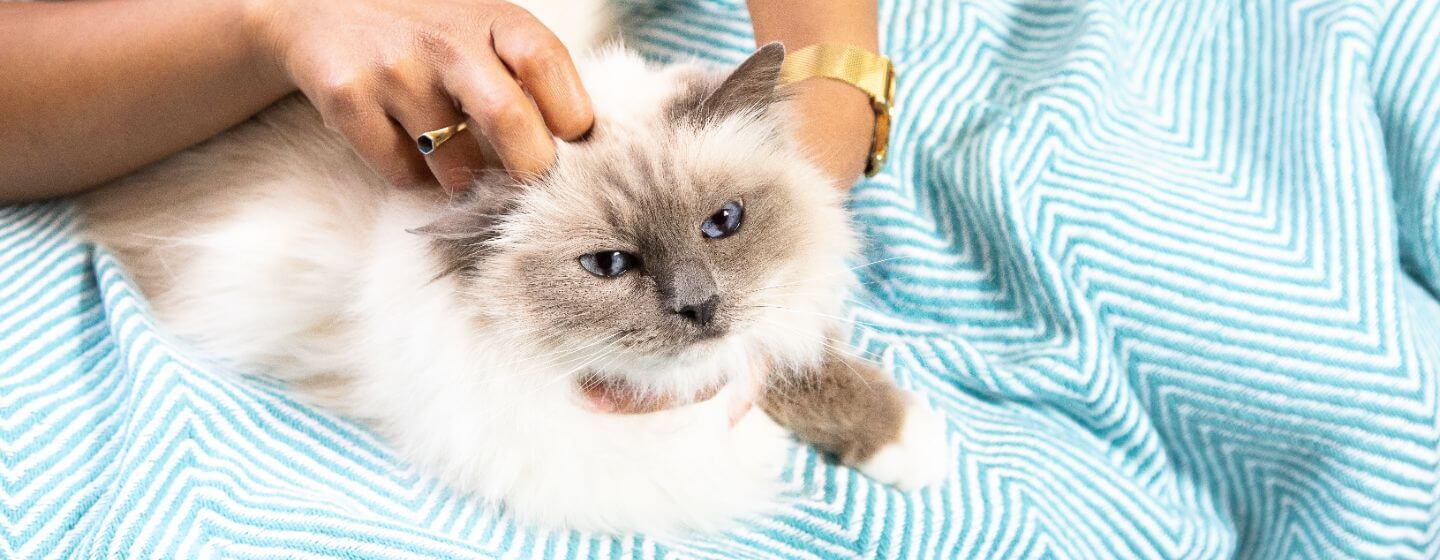
Your cat’s skin is a good general indicator of their health. It should be pink or black (depending on the breed) and their coat should be smooth and shiny. Watch out for crusting, itching, scaling, black or white spots, bald patches and inflamed areas, as this is usually a sign that something’s not right. For example, small black dots could indicate fleas while a dull coat might suggest an underlying illness. Scratching and scabbing, meanwhile, could mean your cat has a skin disease. Pay attention to the skin around your cat’s ears, too. Any brownish discharge or redness should be investigated by your vet. If you know what warning signs to look out for on your cat’s skin, you can help them get treatment as soon as you spot something that doesn’t seem quite right. Dry skin in cats Dry skin isn’t usually a serious health issue for cats, unless they’re continually scratching. The temperature of your home can affect their skin - dry skin can soon become itchy during winter when the heating is turned on. A humidifier might help your cat keep comfortable if this is a problem. Common skin parasites Common skin parasites on cats include fleas, ticks and mites. They can cause itchiness, inflammation and skin lesions, as well as hair loss. In some more serious cases, a heavy flea infestation can cause anaemia in kittens, which can be dangerous to their health. Fleas can also cause a specific allergy in cats known as flea allergy dermatitis (FAD - see below for more information). Most cat skin conditions involving parasites can be treated quickly, although some may require longer-term treatment. Identifying cat fleas Cats are very good at grooming themselves, so owners are sometimes surprised to learn that their cat has fleas! Many cat skin conditions can be the caused by fleas, and the most obvious sign that the pesky parasites have taken up residence on your cat is persistent scratching, although some cats won’t scratch themselves but instead over-groom, sometimes leaving bald patches.
Health
Cat Flu - Symptoms, Treatment and Long-term Effects
Cat Flu: Symptoms, Treatment and Long-term Effects
4 mins read
Flu in cats can be just like human flu: symptoms include a runny nose and achy muscles, and plenty of TLC is needed for recovery. Learn how to spot the signs and symptoms of flu and how it can be treated. What are the symptoms of cat flu? If you’ve ever been hit with the flu, you will have some sympathy for your cat. The illness isn’t all that different to the human variation. Just like in people, most cats can fight it off; however, for more elderly animals, kittens, or cats with an underlying condition, it can be more serious. Cat flu is generally viral, meaning that in most cases antibiotics won’t be effective. Luckily there are vaccinations available. Although it’s not a guaranteed defence, vaccinating your cat will go a long way toward protecting them, particularly if you’re planning a trip to a cattery or any environment in which groups of cats are kept together. What is cat flu? Whether they’re sneezing or sniffling, the symptoms of cat flu can be fairly easy to identify once you know what you’re looking out for. Here’s a list of some of the more common signs to be aware of: • Sneezing: this is the main way in which the illness is spread. Just a few droplets from an infected cat’s sneeze can carry a distance of metres. • Runny nose. • Watery eyes. • Difficulty with, or noisy, breathing. • Dribbling. • Change in behaviour. • Loss of appetite. • High temperature. • In serious cases, ulcers around the eyes. Symptoms can range vastly in severity: whereas one strain of the virus might only result in a bit of sneezing and a runny nose, another can lead to life-threatening complications. However mild or serious the signs, don’t take a risk. As soon as you spot cat flu symptoms, take your pet to see the vet.
Health
Cat Fleas - Causes, Prevention and Treatment
Cat Fleas: Causes, Prevention and Treatment
7 mins read
Cat fleas are very normaland they’re the most common reason for a cat to develop a skin problem.
Health
Cat First Aid
Cat First Aid
6 mins read
There’s nothing scarier than when our pets are unwell or hurt and we often naturally go into a panic as we don’t know what to do. At Purina, we’ve created this guide to cat first aid to help you keep your pet calm and comfortable until you can reach your veterinarian. Our cats are explorers at heart, whether it’s climbing the tree in the back garden or wandering off to investigate another cat ’s territory. Unfortunately, this love of adventure can sometimes land them in trouble and you may find yourself in need of some cat first aid skills. At Purina, we’ve put together this guide of essential cat first aid tips so you can provide help straight away, giving you valuable time until you can get them to your vet.
Health

Pagination

  • First page
  • Previous page
  • …
  • Page 119
  • Page 120
  • Page 121
  • Page 122
  • Page 123
  • Page 124
  • Page 125
  • Page 126
  • Page 127
  • Next page
  • Last page
Purina Pet Club logo

Join Purina Pet Club for expert tips, helpful advice, exclusive offers and rewards.

Join the Club
Nourishing pets Purina pets grid card
Purina Pet Club logo

Join Purina Pet Club for expert tips, helpful advice, exclusive offers and rewards.

Join the Club
Nourishing pets Purina pets grid card

Footer

  • Cat
    • Care & Advice
    • Find a Pet
    • Food
    • Our Brands
  • Dog
    • Care & Advice
    • Find a Pet
    • Food
    • Our Brands
  • About Us
    • Our Mission
    • Our History
    • Our Purina Promise
    • Purina In The Community
  • Other
    • Join Purina Pet Club
    • Breed Selector
    • Contact Us

Footer

  • Cat
    • Care & Advice
    • Find a Pet
    • Food
    • Our Brands
  • Dog
    • Care & Advice
    • Find a Pet
    • Food
    • Our Brands
  • About Us
    • Our Mission
    • Our History
    • Our Purina Promise
    • Purina In The Community
  • Other
    • Join Purina Pet Club
    • Breed Selector
    • Contact Us

Footer

  • Cat
    • Care & Advice
    • Find a Pet
    • Food
    • Our Brands
  • Dog
    • Care & Advice
    • Find a Pet
    • Food
    • Our Brands
  • About Us
    • Our Mission
    • Our History
    • Our Purina Promise
    • Purina In The Community
  • Other
    • Join Purina Pet Club
    • Breed Selector
    • Contact Us

Footer

  • Cat
    • Care & Advice
    • Find a Pet
    • Food
    • Our Brands
  • Dog
    • Care & Advice
    • Find a Pet
    • Food
    • Our Brands
  • About Us
    • Our Mission
    • Our History
    • Our Purina Promise
    • Purina In The Community
  • Other
    • Join Purina Pet Club
    • Breed Selector
    • Contact Us
© 2026 Purina. All Rights Reserved.

©Reg. Trademark of Nestlé S.A.

Terms & Conditions
Privacy Policy
Cookies
© 2026 Purina. All Rights Reserved.

©Reg. Trademark of Nestlé S.A.

Terms & Conditions
Privacy Policy
Cookies
© 2026 Purina. All Rights Reserved.